How to Automate Payment Provider Switching
Learn how to automate payment provider switching with intelligent routing, failover, risk controls, and reconciliation that protect approvals at scale.
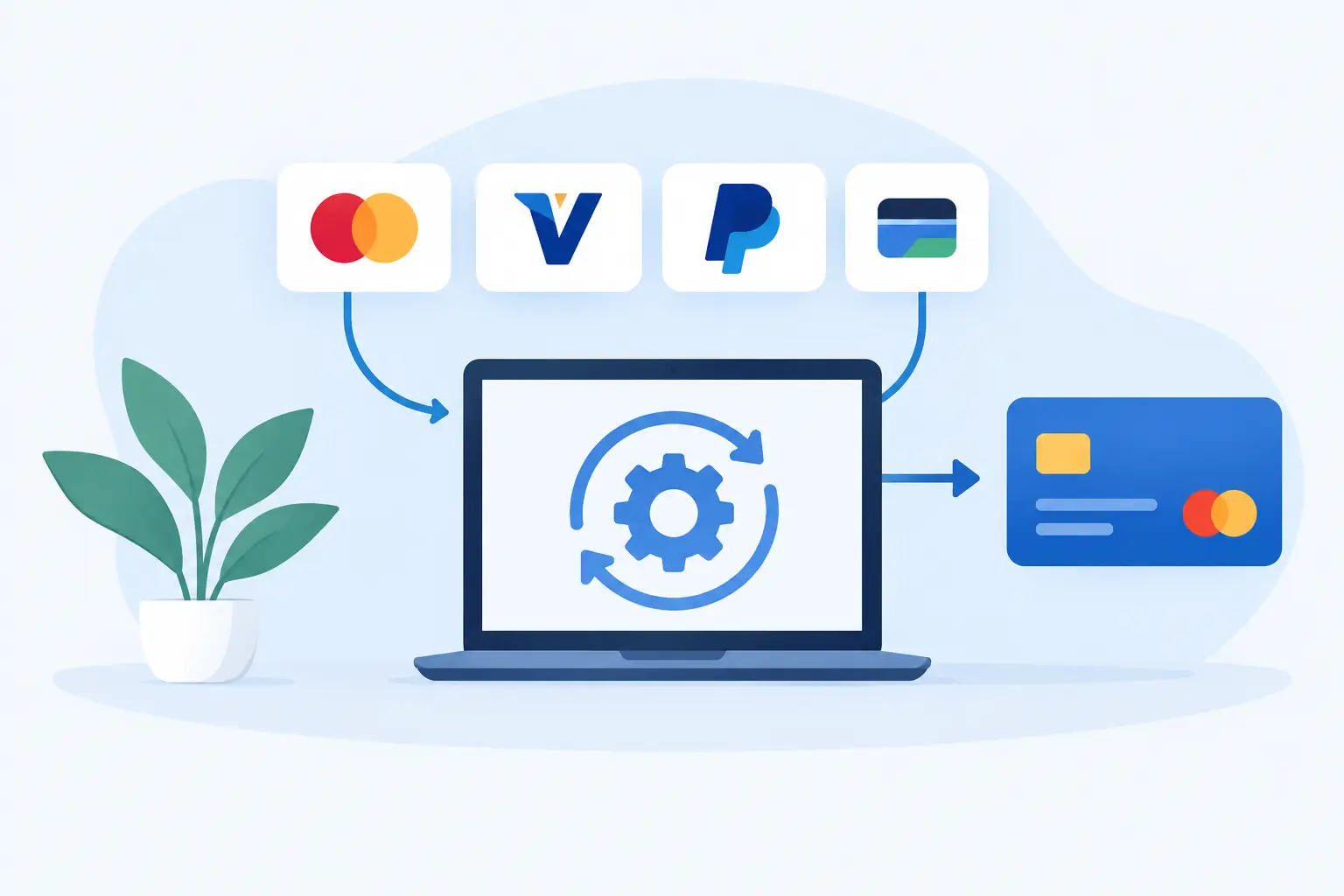
A failed authorization is not always a declined customer. It can be an acquirer outage, a degraded issuer route, a local method interruption, a velocity rule that is too strict, or a provider that no longer fits the transaction. To automate payment provider switching is to turn those events into controlled routing decisions instead of lost revenue, manual tickets, and reactive provider escalations.
For high-volume iGaming, crypto, forex, and international e-commerce operations, provider switching cannot be a basic failover rule. It must account for transaction economics, merchant configuration, payment method availability, fraud exposure, geography, settlement requirements, and the customer experience. The goal is not simply to send traffic elsewhere. The goal is to protect approval rates and continuity without creating duplicate charges, elevated fraud, or reconciliation debt.
Why Static Provider Routing Breaks at Scale
A single primary PSP with a backup provider may work during launch. It becomes fragile as transaction volume, markets, and payment methods increase. Card performance varies by country, issuing bank, card type, MCC, transaction amount, and time of day. Alternative payment methods may have local uptime dependencies. Crypto processing depends on asset, network, confirmation policy, and wallet-risk controls.
Static routing also creates an operational blind spot. If every transaction in a corridor follows the same path, a provider-level issue can affect an entire customer segment before the payments team identifies the pattern. The cost is more than a temporary drop in conversion. Customers abandon deposits and purchases, support volume rises, affiliates and merchants see lower performance, and finance teams inherit a more difficult settlement position.
Automated switching replaces fixed assumptions with measurable decisions. It selects the best eligible provider for each transaction and changes behavior when performance, risk, or availability changes.
How to Automate Payment Provider Switching Safely
The architecture should make decisions before, during, and after each payment attempt. That requires an orchestration layer positioned above individual PSP integrations, with a normalized transaction model and a clear record of every routing decision.
Start with eligibility, not provider preference
A provider should only enter the routing pool if it is eligible for the transaction. Eligibility rules typically evaluate country, currency, payment method, merchant entity, transaction value, customer status, vertical restrictions, and regulatory requirements. For example, a deposit from a Brazilian customer using PIX should never be sent to a card acquirer merely because that acquirer has the lowest recent latency.
This first decision protects both conversion and compliance. It also prevents routing engines from treating all providers as interchangeable. They are not. Each provider has its own supported rails, contract terms, settlement cycles, reserve structures, risk appetite, and operating limits.
For white-label payment businesses, eligibility must be configurable at the merchant level. One merchant may need a preferred acquirer for European cards, while another may require a different route because of its risk profile, legal entity, or commercial agreement.
Score routes using current payment signals
Once the eligible provider set is established, the platform can rank routes using live and historical data. Approval rate is a key input, but it should never be the only one. A route that approves more transactions while generating higher fraud losses or delayed settlements is not necessarily the better route.
A practical route score should consider at least four operational dimensions:
- approval and completion performance by payment method, country, issuer, and amount band
- provider health, including error rates, latency, timeout patterns, and webhook delivery
- transaction cost, including processing fees, FX, reserves, and chargeback exposure
- risk and operational fit, including fraud signals, velocity limits, and settlement requirements
The score should be recalculated on a defined cadence and should respond quickly to major incidents. However, avoid switching routes on a few minutes of noisy data. Payment performance naturally fluctuates. Use minimum transaction thresholds, confidence rules, and guardrails so the routing engine does not overreact to small samples.
Build failover by failure type
Not every failed attempt should trigger the same fallback. A technical timeout can justify an immediate switch to a second provider. A hard issuer decline usually should not. Retrying a card transaction across multiple acquirers after a clear insufficient-funds decline can create unnecessary issuer friction and increase the risk of duplicate attempts.
Define failure taxonomies at the orchestration layer. Separate technical failures, soft declines, hard declines, suspected fraud, authentication failures, and customer cancellations. Each category needs its own response policy.
For example, a technical error may route to an alternate provider with the same payment credentials where permitted. A soft decline may trigger 3DS, a tokenized retry, or a different eligible acquirer. A fraud-rule decline should stop the payment flow unless additional verification changes the risk decision. These controls protect customers and reduce the false-positive cost of overly aggressive retries.
Protect idempotency before triggering a fallback
The most damaging switching failure is not a declined payment. It is charging a customer twice because the first provider timed out while the authorization actually succeeded.
Every attempt needs a unique idempotency key that persists across the orchestration workflow. The platform should store the original request, provider reference, attempt sequence, response state, and webhook updates in a single transaction record. If the first provider remains in an unknown state, the routing policy must determine whether to wait for confirmation, query status, or use a controlled fallback.
This is especially critical for deposits, wallet top-ups, and account funding. A customer who sees two successful charges after a failed interface response will not care that the routing logic was technically sophisticated. They will see a broken payment experience.
Use Circuit Breakers, Not Manual Panic Switching
Provider health monitoring should support automatic circuit breakers. When a provider exceeds defined thresholds for errors, latency, or technical declines, the system temporarily removes it from eligible routing for affected payment flows. Traffic moves to approved alternatives while operations teams receive a clear alert with the relevant market, method, merchant, and error pattern.
Circuit breakers should be granular. Disabling a provider globally because one local method is impaired may remove capacity that is still performing well elsewhere. A stronger model can isolate a specific provider-country-method combination, such as card authorizations in one region or withdrawals through a particular bank rail.
Recovery should also be controlled. Reintroduce traffic gradually through a canary allocation rather than immediately sending the full transaction volume back to the recovered provider. This validates that the incident is resolved and prevents a second performance drop from affecting the entire portfolio.
Keep Routing, Risk, and Reconciliation Connected
Payment provider switching creates a more complex transaction graph. A single customer payment can include an initial route, a failed technical response, an alternate attempt, an asynchronous webhook, a reversal, and a later dispute. If those events live in disconnected systems, finance and operations will spend too much time reconstructing what happened.
The orchestration layer should maintain a provider-agnostic payment lifecycle. Each provider response is normalized into common statuses while preserving raw provider data for audit, dispute handling, and troubleshooting. Settlement and reconciliation workflows then match payments based on the full attempt history, not only the final successful provider.
Risk systems need the same visibility. Switching should not allow fraudsters to probe multiple providers with the same card or wallet after a decline. Shared velocity controls, device intelligence, behavioral signals, and negative lists must operate across the routing layer. For iGaming, this is particularly important because bonus abuse, account takeover, and chargeback exposure often appear across several payment attempts rather than within one authorization.
Design for Merchant-Level Control
Automated switching should centralize infrastructure without removing commercial control. Payment firms and aggregators need rules that can be managed by merchant, region, product line, payment method, and risk tier. A high-risk merchant may require tighter fallback limits and more conservative provider allocation. A mature, low-risk merchant may prioritize approval optimization across multiple acquirers.
A white-label environment should expose these policies through a merchant operations console while keeping core governance centralized. ZepoPay, for example, combines 75+ providers and 250+ payment methods in one operating environment, allowing payment businesses to configure routing and provider coverage without maintaining a separate integration stack for every rail.
The technical foundation matters here. Event-driven status updates, durable transaction storage, real-time monitoring, role-based access, and API-level policy controls make switching observable and manageable. The business result is faster action when a market changes, without asking engineering teams to deploy emergency routing logic.
Measure the Outcome Beyond Approval Rate
A switching strategy is working when it improves the payment operation as a whole. Track approval rate by route, but also measure technical decline recovery, duplicate-payment incidents, fraud loss, chargeback rate, processing cost, provider concentration, time to detect outages, and settlement exceptions.
Do not judge every route on a single global metric. A provider can be excellent for a specific local wallet and poor for international cards. The right routing model is deliberately uneven: it assigns traffic where each provider is strongest and preserves alternatives when conditions change.
The strongest payment teams treat provider switching as a continuously managed control plane. Build the rules, test them against real failure scenarios, and give operations teams clear authority to adjust them. When the next provider incident occurs, your payment flow should respond before your customers have a reason to notice.