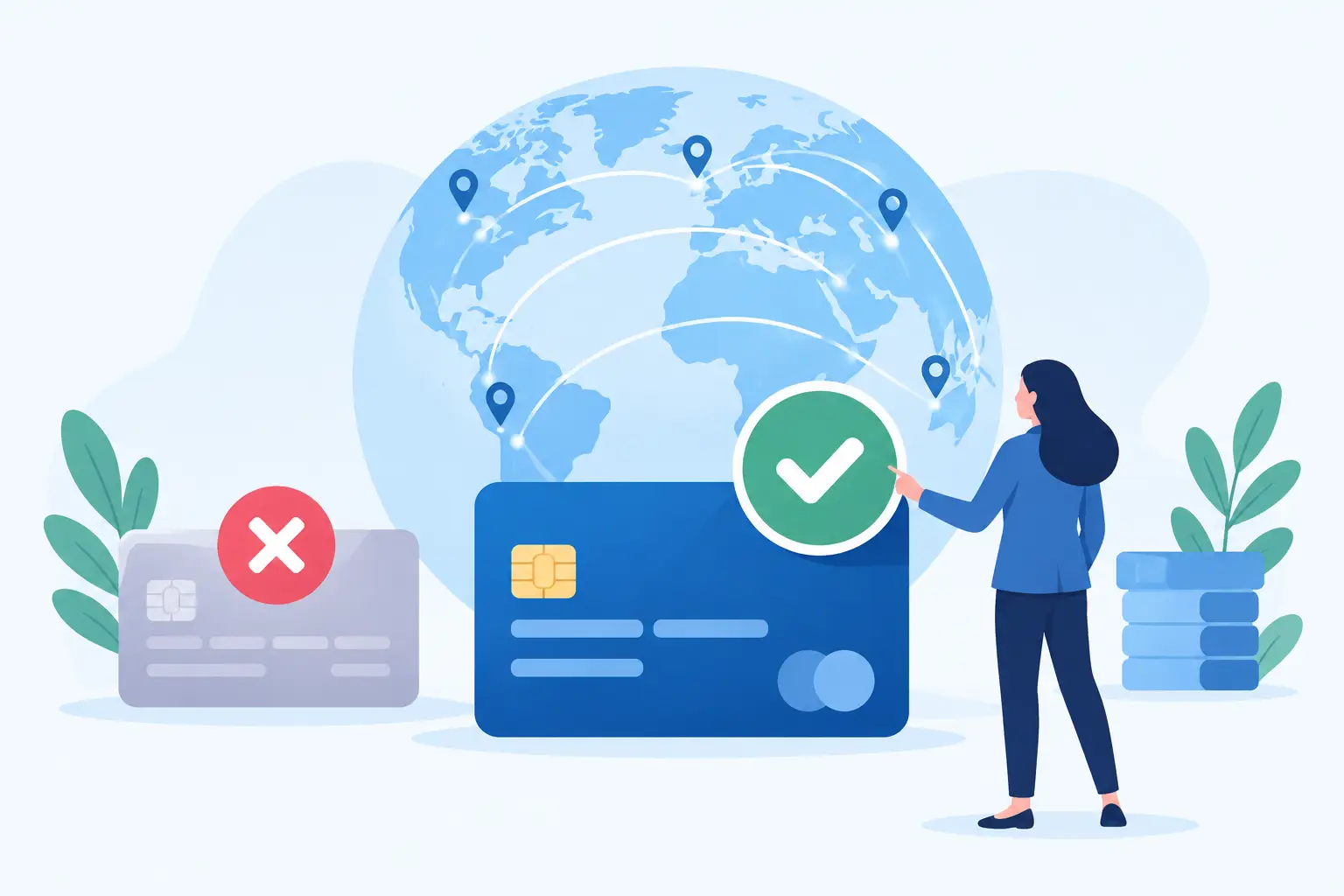
Fiat to Crypto On Ramp API for Global Payments
Deploy a fiat to crypto on ramp API for faster conversion, stronger risk control, and local payment coverage across global markets at enterprise scale.

A customer who decides to buy crypto has already crossed the hardest commercial threshold: intent. Losing that customer to a declined card, an unfamiliar payment flow, or a slow compliance handoff is not a crypto problem. It is a payments architecture problem. A fiat to crypto on ramp API gives exchanges, wallets, brokers, and payment businesses the infrastructure to turn local currency into digital assets without forcing users through a fragmented checkout experience.
For high-volume businesses, the objective is bigger than adding a Buy Crypto button. The on-ramp must accept the payment methods customers actually use, apply risk controls before losses occur, route transactions for higher approval rates, and give operations teams a reliable record of every payment, conversion, payout, and exception. That requires orchestration, not another isolated provider integration.
What a Fiat to Crypto On Ramp API Should Control
At its core, a fiat to crypto on ramp API connects a customer payment to the purchase and delivery of a digital asset. The customer selects an amount, payment method, and asset. The platform collects payment authorization, performs identity and risk checks, confirms settlement conditions, and instructs the crypto provider, exchange, or wallet layer to release the asset.
That sequence sounds linear. In production, it rarely is. Card authorizations can be reversed. Bank transfers may arrive late or with incomplete references. A customer may pass identity verification but trigger transaction monitoring. An issuer can approve one attempt and decline the next because the payment descriptor, transaction pattern, or cross-border configuration changed.
A commercial-grade API needs to handle those realities through clear transaction states, signed webhooks, idempotency controls, retry logic, and auditable event records. Product teams need predictable endpoints. Risk teams need the ability to hold, reject, or review activity. Finance teams need reconciliation between fiat collection, provider fees, crypto delivery, and settlement balances.
The API is therefore not simply a checkout connector. It is the control plane between payment acceptance and asset delivery.
Conversion Depends on Local Payment Coverage
Crypto users do not behave like one global market. In the United States, cards and bank-based payments may dominate a particular audience. In other regions, users may expect instant bank transfers, mobile wallets, local schemes, or alternative payment methods. Forcing every customer through one card flow creates unnecessary declines and abandonment.
A strong on-ramp design presents payment methods dynamically according to country, currency, device, transaction size, customer history, and provider availability. The customer sees relevant options, while the platform routes behind the scenes according to cost, approval performance, risk appetite, and settlement speed.
This is where single-provider designs become restrictive. One processor may perform well for domestic card payments but have weak coverage for local transfers. Another may support a critical market but produce inconsistent callbacks or limited reporting. Building separate integrations for each provider creates an operational burden that grows with every new market.
Payment orchestration changes the model. Rather than hard-coding business logic around one acquirer or crypto gateway, the platform applies routing rules across available providers. A transaction can be sent to the preferred route, retried through an approved alternative when appropriate, or directed to a local method based on the user’s market. The result is more control over conversion without continuously rebuilding the product layer.
Risk Controls Must Match the Asset Delivery Model
Fiat payments and crypto settlement create an uneven risk profile. A cardholder may dispute a transaction after the digital asset has reached an external wallet. The asset can move quickly; the payment can be reversed later. That gap makes fraud prevention and chargeback strategy central to on-ramp economics.
Risk should start before payment authorization. Device signals, velocity limits, account age, location consistency, payment instrument history, transaction size, and behavioral patterns can identify activity that deserves additional verification or a manual review. The right threshold depends on the business model. A regulated exchange with strong identity data may accept a different risk posture than a high-growth wallet serving customers across multiple payment corridors.
After authorization, the platform needs rules for when to deliver assets. Some transactions can be released immediately under a defined risk score. Others may require stronger authentication, a cooling period, settlement confirmation, or compliance approval. The fastest user experience is not always the safest one, especially for first-time customers, large orders, or high-risk payment methods.
Chargeback defense also depends on evidence quality. Store the authentication result, payment confirmation, customer acceptance of terms, device and session signals, wallet destination, asset delivery timestamp, and transaction communications in a retrievable case record. When a dispute occurs, operations teams should not have to assemble evidence from disconnected systems.
For iGaming operators, forex brokers, and merchant aggregators expanding into crypto, shared fraud intelligence is especially valuable. Risk patterns often move between brands, payment methods, and jurisdictions faster than a single merchant can identify them. Centralized controls help stop repeat abuse before it becomes a portfolio-wide loss problem.
Build for Operations, Not Just the Checkout Screen
The customer journey may take seconds, but the payment operation continues long afterward. Every successful purchase creates questions around provider settlement, exchange execution, fees, refunds, customer support, and accounting. A fiat to crypto on ramp API should expose enough data to answer those questions without engineering intervention.
Transaction records should connect the merchant order, customer profile, payment attempt, provider reference, risk decision, exchange quote, asset delivery reference, and settlement status. Webhooks should report meaningful state changes, including pending verification, payment failure, authorization success, delivery completion, refund initiation, and dispute activity.
A merchant operations environment matters as much as the API. Teams need role-based access, searchable transaction history, configurable routing, reconciliation exports, and a clear way to investigate failures. Support agents need to see whether the issue is a declined issuer authorization, an incomplete identity check, a pending bank transfer, or a delayed asset release. Without this visibility, growth increases ticket volume faster than the support organization can respond.
The same principle applies to merchant management. Payment firms and aggregators that offer on-ramp services to multiple brands need separate configurations for fees, payment methods, risk rules, settlement accounts, and reporting. White-label infrastructure allows them to keep control of the customer relationship while operating through a common payments stack.
Technical Requirements That Prevent Expensive Rework
The integration should be simple for developers, but the underlying platform must support enterprise operating conditions. Start with an API that provides authenticated requests, consistent error responses, versioning, idempotency keys, and signed webhooks. Duplicate purchase requests and ambiguous callback handling are avoidable sources of financial and support risk.
Security architecture should include encrypted data handling, tokenization where applicable, access controls, audit logs, and separation between operational roles. Payment credentials, identity data, and wallet-related records require different access patterns, but all need traceability.
Availability also has commercial consequences. If a preferred provider is down, the platform should be able to use an approved alternative rather than presenting a dead end to the customer. If an external service responds slowly, timeout policies and queue-based processing should prevent a temporary dependency issue from becoming a system-wide failure.
ZepoPay approaches this as payment infrastructure rather than a narrow checkout integration. Its white-label platform combines 75+ providers and 250+ payment methods through one API and merchant operating environment, giving payment businesses a foundation for local acceptance, routing, risk workflows, settlements, and branded deployment without assembling each component independently.
Choosing the Right On-Ramp Architecture
The best implementation depends on who owns the customer, the regulated activity, and the asset delivery process. Some businesses need a third party to manage conversion and compliance responsibilities. Others need direct control over the payment experience, transaction data, routing rules, and merchant economics. There is no universal answer.
A managed model can shorten launch time, but it may limit branding, provider choice, reporting depth, and control over the user journey. A fully internal build offers maximum customization, but requires sustained investment in payment integrations, risk operations, reconciliation, compliance workflows, and support tooling. An orchestration-led white-label platform often sits between those extremes: the business controls its brand and operating rules while relying on established infrastructure for the payment layer.
Before selecting an API, test it against real operating questions. Can it support your highest-value markets and preferred payment methods? Can you define when assets are delivered? Can you route around provider performance issues? Can finance reconcile every movement of value? Can risk teams act without waiting for developers? The answers will determine whether the on-ramp supports growth or becomes the next bottleneck.
The right next step is to map one priority customer journey from payment selection through asset delivery, settlement, and dispute handling. Any gap in that path is not a minor integration detail. It is a future conversion leak, fraud exposure, or operations cost waiting to surface.