Payment Dispute Management Guide for PSPs
Payment dispute management guide for PSPs and digital operators: build evidence, control fraud, cut response times, and protect approval rates at scale.
A dispute is not an isolated customer-service ticket. For a PSP, iGaming operator, crypto platform, or merchant aggregator, it is a time-bound revenue and risk event with consequences for cash flow, fraud exposure, acquirer relationships, and approval rates. This payment dispute management guide explains how to build an operating model that treats disputes as measurable payment infrastructure rather than a back-office exception.
Start With the Economics of a Dispute
A disputed transaction can create more than a reversed sale. The merchant may lose the transaction value, pay a dispute fee, absorb fulfillment or bonus costs, spend operations time gathering evidence, and face elevated monitoring from an acquirer or card scheme. At high volume, weak dispute controls can also affect processing terms, reserve requirements, and the ability to maintain stable card acceptance.
The first operational distinction is between fraud and dissatisfaction. True fraud requires a different response from friendly fraud, forgotten subscriptions, delayed delivery, unclear descriptors, or disputes triggered by confusing deposit and withdrawal flows. Treating every reason code as the same problem produces generic evidence and poor recovery rates.
For high-risk verticals, the stakes rise quickly. An online casino may need to prove account ownership, gameplay activity, deposit history, and responsible-gaming controls. A crypto exchange may need to show wallet addresses, authentication events, device intelligence, and transaction-confirmation records. A forex broker may need trading logs, client agreements, risk disclosures, and withdrawal evidence. The dispute process has to reflect the commercial reality of each transaction type.
Build a Dispute Workflow Before Volume Forces It
Effective payment dispute management begins with ownership. Risk teams should determine whether a transaction should be accepted, challenged, or escalated. Operations teams should control deadlines, evidence collection, and communication with acquirers. Finance should reconcile reversals, fees, recoveries, and reserve movements. Product and engineering teams should use dispute trends to correct broken customer journeys.
This does not require a large team at launch. It does require explicit service-level targets. Define who owns a case from notification to submission, how quickly the case is classified, and who can approve a write-off when representment is unlikely to succeed. If responsibilities are spread across inboxes and spreadsheets, deadlines will be missed as transaction volume grows.
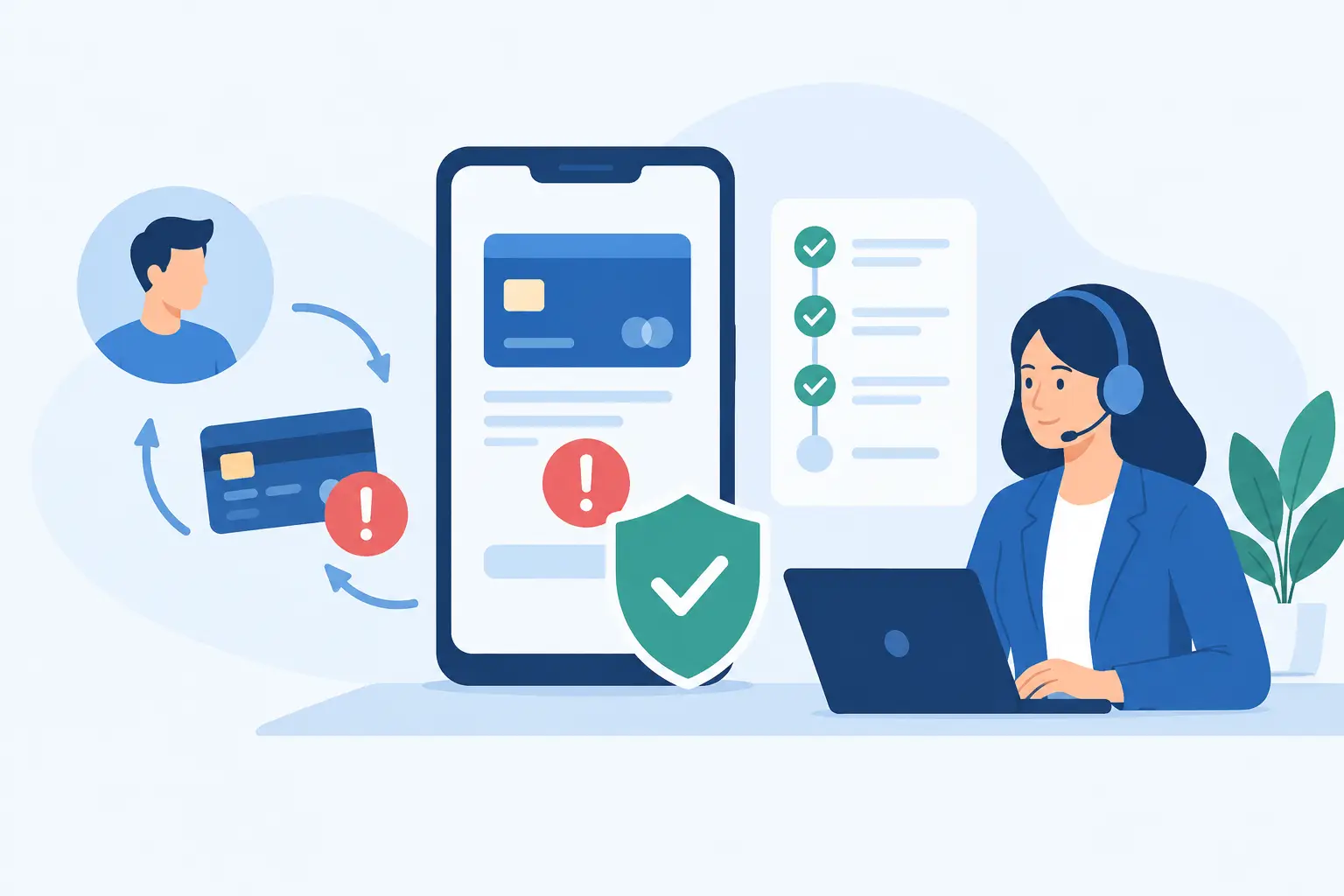
A useful workflow has four states: intake, decision, evidence assembly, and outcome analysis. Intake captures the dispute notification and deadline. Decision determines whether to accept or fight the case. Evidence assembly produces a reason-code-specific package. Outcome analysis records the result and identifies a prevention action. Every step should be visible in a single operating environment, not reconstructed across PSP portals.
Classify by Reason Code, Rail, and Merchant Behavior
Reason codes establish what must be proven. A cardholder-authorization claim needs evidence that the account holder approved the transaction. A non-receipt claim needs proof of delivery or service access. A recurring-transaction claim requires clear enrollment, billing terms, and cancellation records. A processing-error claim may require transaction logs showing that no duplicate charge or incorrect amount occurred.
Classification should also include the payment method, issuer geography, acquirer, merchant, customer segment, and transaction pattern. Disputes often cluster around a specific issuer, local payment rail, promotion, deposit amount, or checkout release. A portfolio-level dispute rate can hide a serious problem inside one merchant ID or one routing path.
Collect Evidence at Authorization, Not After a Chargeback
The best evidence package is built before the customer disputes the payment. Once a case arrives, many organizations discover that device data was not retained, account events are inaccessible, or transaction metadata differs between platforms. By then, the response window is already running.
For card payments, preserve authorization responses, AVS and CVV results where permitted, 3D Secure data, token references, IP address, device fingerprint, login history, customer communications, and order or service records. For digital goods and high-risk services, proof of access is often more valuable than a basic invoice. Record timestamps for account creation, identity checks, password resets, deposits, gameplay or trading activity, withdrawals, and support interactions.
Evidence must be readable by a reviewer outside your organization. A raw event log with thousands of lines may be technically accurate but commercially ineffective. Create concise case narratives that connect the cardholder, account, authentication event, transaction, and delivered value. Attach only the records that support the applicable reason code, then retain the underlying audit trail in case escalation is required.
There is a trade-off. Collecting every possible signal creates retention, privacy, and data-governance obligations. Collecting too little weakens fraud decisions and representment. Set retention rules with legal and compliance teams, then make evidence capture automatic wherever possible.
Prevent Disputes Through Payment Design
A significant share of disputes can be prevented before authorization. Clear billing descriptors reduce cardholder confusion. Accurate transaction receipts and accessible self-service cancellation reduce avoidable service claims. Visible withdrawal terms, bonus conditions, refund policies, and support channels reduce disputes driven by surprise rather than fraud.
The payment flow itself also matters. Step-up authentication on high-risk deposits can lower unauthorized-use disputes, but applying it indiscriminately can reduce conversion. Risk-based orchestration is the better approach: require more verification when device, velocity, issuer behavior, location, or account signals justify friction; keep proven customers moving through a lower-friction path.
Routing decisions deserve the same scrutiny. One acquirer may deliver strong approvals but produce a poor mix of fraud or disputes for a particular market, merchant category, or issuer population. Another may have lower headline approvals but stronger authentication support and more stable chargeback performance. Optimize for net approved revenue after fraud, disputes, fees, and operational cost, not authorization rate alone.
Use Alerts and Refunds With Discipline
Pre-dispute alerts can give merchants a narrow opportunity to resolve a customer complaint before it becomes a formal chargeback. They are particularly useful when support response times are short and refund authority is clear. But alerts are not a substitute for fixing root causes. If the same transaction type repeatedly produces alerts, investigate the product, descriptor, support process, or fraud rule behind it.
Refunding every alert is also not always the right move. For low-value cases with weak evidence, a fast refund can be cheaper than representment. For organized fraud, repeated refunds can train attackers to use the dispute channel as a payout mechanism. Establish value thresholds, customer-history criteria, and escalation rules so agents can act quickly without creating a new loss vector.
Measure the Metrics That Protect Processing Capacity
Dispute operations should run on a weekly dashboard, with urgent segments monitored daily. Track dispute count and value, dispute-to-sales ratio, win rate, accepted-loss rate, response-time compliance, representment cost, alert volume, refund volume, and loss by reason code. Break every metric down by merchant, payment method, provider, country, issuer, product, and customer cohort.
Look beyond the aggregate win rate. A high win rate may reflect teams only contesting easy cases, while a low win rate may still be commercially rational if it prevents larger fraud losses or protects an acquirer relationship. The key question is whether each decision improves net revenue and reduces future exposure.
For operators with multiple providers, centralization is critical. ZepoPay can consolidate payment operations across 75+ providers and 250+ payment methods, helping teams apply routing, risk, transaction, and merchant-level data to a single dispute-control process rather than working from disconnected portals.
Turn Outcomes Into Rule Changes
Every loss should generate a learning decision. Was authentication absent? Did a customer receive unclear terms? Was a fraud signal ignored to protect conversion? Did a support queue miss a cancellation request? Did an acquirer integration fail to return the data needed for a defense?
Assign each material trend to an action owner and deadline. That may mean tuning velocity controls, revising a descriptor, adding a confirmation screen, changing an acquirer route, restricting a promotion, or improving evidence retrieval. The loop matters more than the individual report: dispute data must change the payment operation.
Maintain Acquirer-Ready Governance
Acquirers and schemes expect more than a low dispute ratio. They want evidence that the business can identify fraud, handle complaints, control merchant behavior, preserve records, and respond within required timeframes. This is especially relevant for PSPs and aggregators that carry exposure across many sub-merchants.
Maintain documented policies for case handling, escalation, evidence retention, refund authority, merchant monitoring, and suspicious-activity review. Test the process with sample cases from each major payment rail. If a new merchant, country, or alternative payment method launches, confirm that the data model and operational playbook can support a dispute before volume arrives.
Payment disputes will never disappear from global commerce. The practical advantage comes from making them predictable: capture the right signals at authorization, respond with evidence that fits the claim, and use each outcome to make the next transaction safer and more profitable.