Payment Facilitator Versus PSP: Key Differences
Compare payment facilitator versus PSP models for control, compliance, onboarding, risk, and scale. Choose the operating model that fits your business.
A sportsbook can have strong acquisition, localized checkout, and a compelling product, then lose revenue because merchant onboarding takes weeks or a single processor decline pattern goes unmanaged. The payment facilitator versus PSP decision determines who owns that operational layer: merchant relationships, risk exposure, acquiring access, settlements, and the systems behind them.
For payment businesses, operators, crypto platforms, forex brokers, and merchant aggregators, this is not a terminology exercise. It is a decision about how much control to retain, how much regulatory and financial responsibility to assume, and how quickly the business can expand into new markets.
Payment facilitator versus PSP: the core distinction
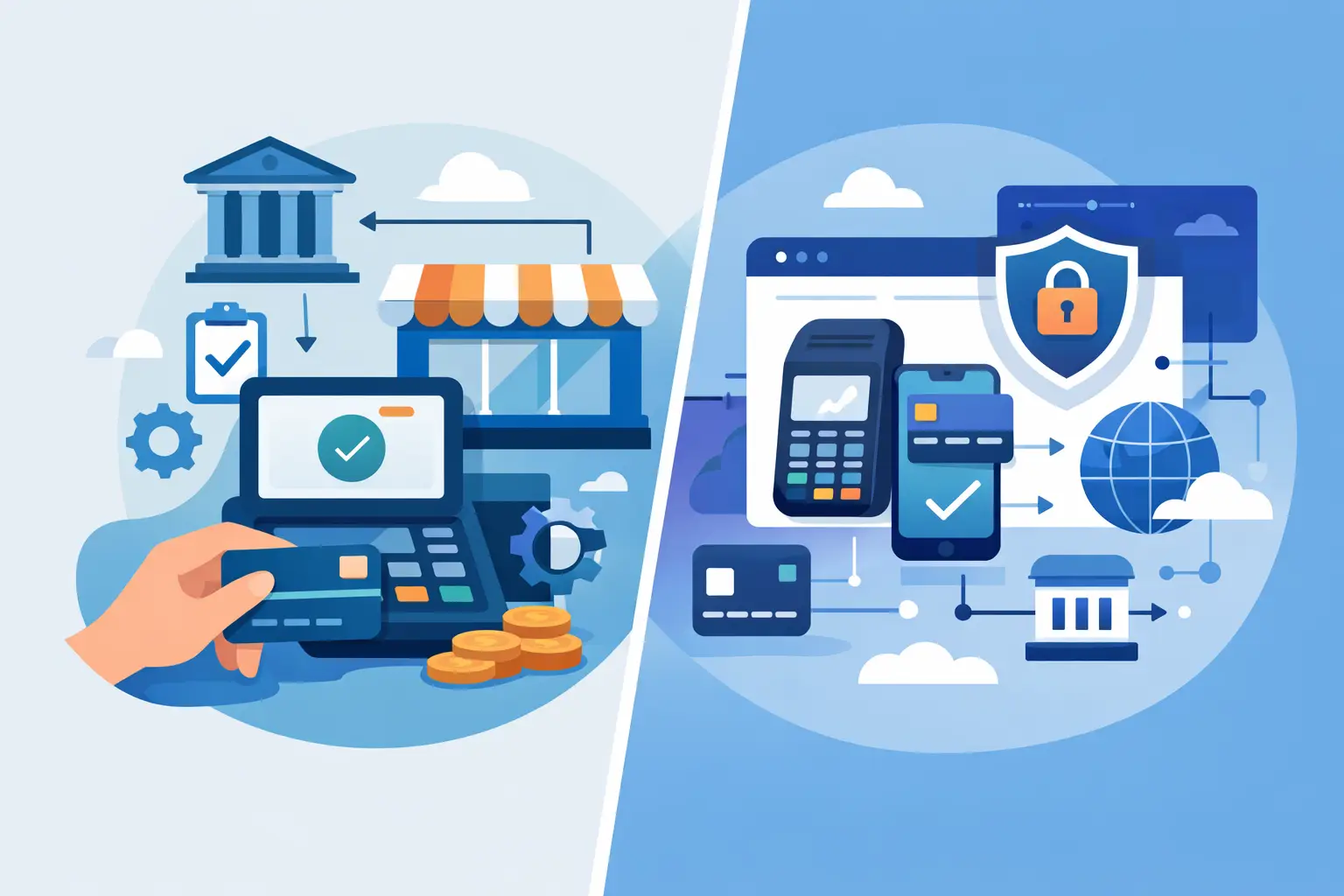
A payment service provider, or PSP, is a broad category. A PSP enables merchants to accept payments by connecting them to one or more acquirers, processors, alternative payment methods, wallets, bank rails, and fraud services. Some PSPs operate as technology platforms. Others also hold licenses, manage funds, provide acquiring, or support merchant-of-record structures.
A payment facilitator, commonly called a PayFac, is a more specific operating model. The PayFac enters into a master agreement with a sponsoring acquirer or bank, then onboards individual businesses as sub-merchants under that relationship. Rather than requiring every merchant to negotiate and integrate directly with an acquirer, the PayFac packages payment acceptance, onboarding, and often settlement into its own merchant experience.
In practical terms, a PayFac is usually a type of PSP, but not every PSP is a PayFac. The overlap creates confusion because both can provide a checkout API, merchant dashboard, payment routing, fraud controls, and reporting. The meaningful difference is who sits closest to the merchant and who carries the responsibility for sub-merchant underwriting, monitoring, and acquiring compliance.
Who controls the merchant relationship?
The PayFac model is designed for businesses that want to own the merchant relationship at scale. A marketplace, vertical SaaS company, affiliate network, gaming group, or payment entrepreneur can onboard sub-merchants under its own brand, define its commercial terms, configure reserves, and manage payout schedules. The merchant sees the PayFac as its payment provider, even when a sponsor acquirer supports card acceptance in the background.
That control comes with obligations. The PayFac must build or operate disciplined processes for know-your-business checks, beneficial ownership verification, sanctions screening, transaction monitoring, fraud response, chargeback handling, merchant support, and ongoing portfolio reviews. Acquirers will expect transparent data and clear controls, particularly in regulated or high-risk verticals.
A PSP model can reduce that operational burden. The PSP may onboard merchants directly, contract with them, and manage the core compliance process. This is often the better route when a business needs payment acceptance quickly but does not need to become a merchant aggregator or assume direct responsibility for a large sub-merchant portfolio.
The trade-off is less ownership. If the PSP owns onboarding and acquiring relationships, it may determine risk tolerance, settlement timing, supported business categories, and processor availability. That can become restrictive when the merchant base includes online casinos, sportsbooks, crypto businesses, forex brokers, or international e-commerce sellers with varied risk profiles.
Comparing the operating models
The right choice depends on where the business wants to create value. A PSP primarily sells payment access and transaction performance. A PayFac sells a payment business layer: merchant onboarding, pricing, operations, settlement controls, and a branded payment experience.
Onboarding speed
A PayFac can make merchant onboarding materially faster after its compliance program and sponsor-bank framework are in place. Sub-merchants can be assessed through rules-based workflows and approved within the PayFac's defined risk appetite. This is especially valuable when merchants need to activate payment methods without waiting for separate acquiring contracts.
However, speed does not mean reduced scrutiny. Fast onboarding that lacks appropriate verification creates future losses through fraud, chargebacks, frozen funds, or acquirer intervention. High-risk merchants require enhanced due diligence and ongoing monitoring, regardless of how efficient the onboarding interface appears.
Risk and liability
A direct PSP relationship can place more risk operations with the PSP and its acquiring partners. That may suit an operator focused on its core product rather than payment portfolio management.
A PayFac accepts greater responsibility. It needs visibility into each sub-merchant's activity, transaction patterns, dispute ratios, prohibited activity, and settlement exposure. For iGaming and other high-velocity verticals, monitoring must go beyond generic fraud scoring. It should connect player behavior, payment instrument patterns, bonus abuse signals, chargeback reason codes, and merchant-level performance before losses accelerate.
Economics and pricing control
The PayFac model provides more room to set pricing, retain margin, and design commercial packages for sub-merchants. It can combine transaction fees with onboarding charges, reserves, foreign exchange margins, payout fees, and premium risk or reporting services.
That flexibility requires financial discipline. Pricing must cover processor costs, scheme fees, fraud losses, chargeback exposure, support, compliance operations, and working-capital requirements. A portfolio with aggressive pricing and weak reserves can grow transaction volume while increasing net risk.
A PSP offers simpler economics. The merchant pays for access to an existing stack and typically gives up some control over pricing structure and downstream provider selection. For a business that does not intend to monetize payment services as a standalone capability, that can be the rational choice.
Payment routing and approval rates
Neither model automatically delivers better approval rates. Performance depends on the underlying provider network, local payment coverage, routing logic, tokenization, retry strategy, fraud rules, and the quality of transaction data sent to each processor.
A PayFac with only one acquiring route remains exposed to that acquirer's declines, outages, regional gaps, and policy changes. A PSP with multi-provider orchestration can provide stronger resilience than a poorly connected PayFac. The operating model and the payment architecture must be evaluated separately.
When a PayFac model makes sense
The PayFac route is usually justified when payment acceptance is part of the company's commercial product, not simply an internal function. It is a strong fit for businesses that need to onboard many merchants under one brand, control merchant pricing and settlement rules, create vertical-specific risk policies, or build a recurring payments revenue stream.
It also fits organizations with the capacity to operate the model properly. That means experienced compliance ownership, clear sponsor-acquirer relationships, reconciliation controls, reserve policies, merchant support, dispute management, and capital planning. A PayFac is not just a checkout interface with a logo applied to it.
For an iGaming group, for example, the model may support centralized payment operations across multiple brands and jurisdictions. But the group still needs country-specific payment methods, licensing alignment, player-risk controls, and contingency routes when a provider's performance changes.
When a PSP model is the better choice
A PSP is often the faster, lower-complexity option for merchants that want to accept payments without operating a merchant aggregation business. It can also be the right foundation for a company testing a new region, validating demand, or processing lower merchant volumes before investing in a full PayFac program.
The key question is whether the PSP provides enough operational control. A serious international business should assess provider coverage, supported payment methods, settlement currencies, high-risk policy, dispute tooling, reporting depth, data portability, and the ability to add new processing routes without rebuilding the checkout stack.
Avoid treating a single PSP contract as a long-term resilience strategy. Where revenue depends on uninterrupted payment acceptance, an orchestration layer can reduce dependency on any one acquirer, wallet, local payment method, or fraud vendor.
Build the infrastructure before the license burden
Many businesses do not need to choose between building a PayFac from scratch and accepting a rigid PSP model. White-label payment infrastructure can provide the operating environment required to launch a branded payment service while the company structures its acquiring, compliance, and commercial model.
The platform should unify provider integrations, merchant management, routing, settlements, reconciliation, risk controls, support workflows, and reporting in one environment. It must also separate the parts that change frequently - provider rules, routing logic, merchant configurations, local methods, and fraud thresholds - from the customer-facing experience.
ZepoPay supports this approach with white-label infrastructure that connects 75+ providers and 250+ payment methods through a single API and merchant operations environment. For a growing PSP or emerging PayFac, that can shorten the path from commercial strategy to a deployable branded platform without forcing the team to build every processor integration, merchant portal, and settlement workflow internally.
The decision is operational, not semantic
Before selecting a model, define who will contract with merchants, who will hold reserves, who will approve or reject sub-merchants, who will investigate suspicious activity, and who will explain a reconciliation discrepancy at the end of the month. If those answers point to your organization, you are moving toward a PayFac operating model.
If your priority is payment acceptance with less regulatory and financial ownership, a PSP relationship is likely the better starting point. If the objective is to build a branded payment business with control over merchants, margins, routing, and settlement operations, prepare for the responsibilities of a PayFac as seriously as the revenue opportunity.
The strongest payment strategy is the one that matches your risk capacity, market plan, and operational maturity - then gives you enough infrastructure control to change course without interrupting revenue.